
Axolotl Colors: Every Type of Axolotl, From Wild to Glow-in-the-Dark
How many types of axolotl are there? A guide to axolotl colors: wild type, leucistic (pink), golden albino, melanoid, copper, GFP, the rarest morphs and more.
▶ Play today's puzzleFree · 3 new boards every day · no sign-up
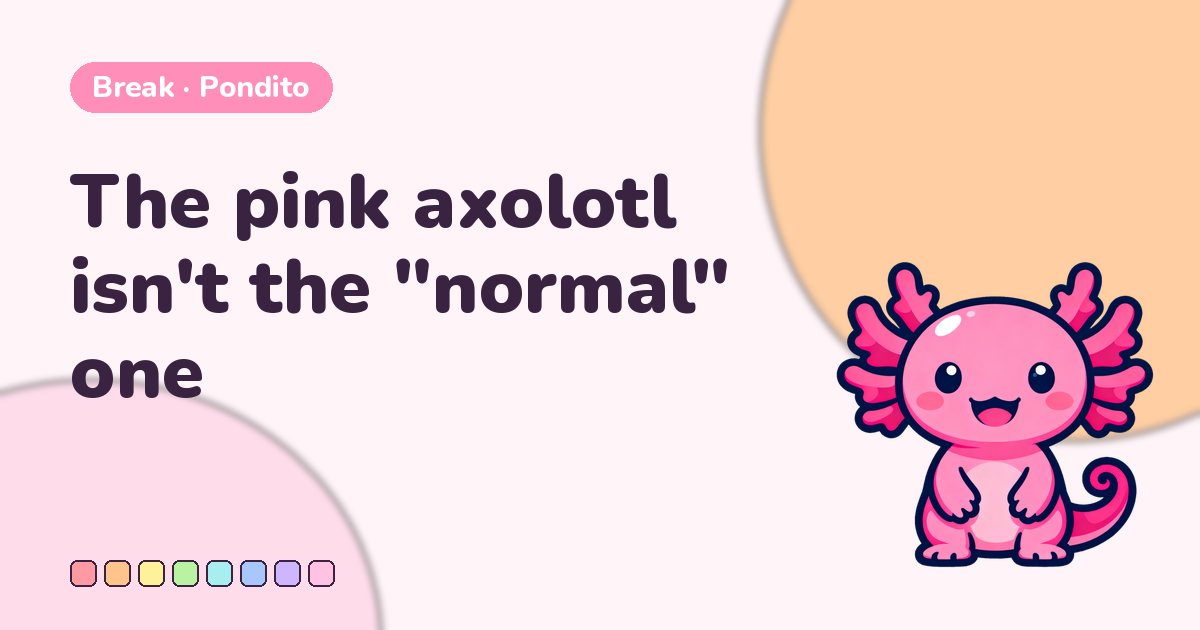
Ask someone to picture an axolotl and they'll probably imagine a pink, smiling creature with frilly gills, the one on plushies, phone cases and in Minecraft. Here's the twist: that pink axolotl isn't what they look like in the wild.
Axolotls come in a surprising range of colors, called "morphs" by breeders. Some are natural genetic variations, some were bred in labs, and one actually glows. Here's how to tell them apart.
How many types of axolotl are there?
There's one axolotl species, Ambystoma mexicanum, native to the lakes and canals of Mexico City. What people call "types" are color variations of that one species.
According to the Wikipedia article on axolotls, axolotls have four pigmentation genes, and when those are mutated they create the main color variants. Breeders then combine those genes, which is why you'll see lists of 15, 20 or more "types" online. Most of them are mixes of a handful of basic morphs.
The main axolotl colors
Wild type
This is the original. Wild type axolotls are brown, gray or olive with gold speckles, and they have a shiny gold ring around a black pupil. They can even shift their shade a little, likely for camouflage. The axolotls still living in Xochimilco look like this: perfect for hiding in a muddy canal, not so much for a plushie.
Leucistic (the pink one)
The famous one. Leucistic axolotls have a pale pink or white body with dark eyes. As the breeder guide at Axolotl Central explains, leucism comes from a gene that stops pigment cells from spreading across the body as the embryo develops, but the eyes keep their color. Some have dark freckles on their face and back (breeders call these "dirty leucistic").
Golden albino
Golden albinos lose their dark pigment but keep their yellow pigment, so they look golden or peachy with pale or pinkish eyes. Many have a shiny, almost metallic sheen.
White albino
White albinos look a lot like leucistics, but with light, pinkish eyes. Wikipedia notes these white animals with pink eyes are often double mutants for both the albino and leucistic genes, and they're common in the pet trade.
Melanoid
Melanoids are the dark ones: solid black, deep brown or dark blue-gray, with few or no spots and no shiny eye ring. They have more dark pigment and lack the shiny cells that give other morphs their sparkle.
Axanthic
Axanthic axolotls can't make yellow pigment, so they look gray, like a wild type with the color turned down.
Copper
Coppers are light brown with orange or copper-colored spots instead of dark ones. One giveaway: shine a light at their eyes and the pupils look reddish, while a wild type's pupils stay black.
GFP (the glowing one)
GFP stands for green fluorescent protein. Scientists added a fluorescent jellyfish gene to axolotls in the lab to help study regeneration, and that gene gets passed down when they breed. Under a blue or black light, GFP axolotls glow green. GFP can be combined with any color, so you can have a glowing leucistic or a glowing golden albino.
What's the rarest axolotl color?
Breeders usually point to mosaics: axolotls with two different colors in one body, sometimes split almost down the middle. This happens from a quirk very early in the egg's development and can't be reliably bred. Axolotl Central notes that almost all mosaics turn out to be male, and their babies come out as ordinary morphs. Newer morphs like hypomelanistic (a pale, yellowish axolotl with much less dark pigment) are also unusual.
And the bright blue axolotl? That's mostly a Minecraft thing, where blue is the rare one. In real life, the closest you'll get is a melanoid with a dark blue-gray tint.
Other animals called "ajolote" in Mexico
In Mexico, ajolote doesn't always mean the axolotl. The genus Ambystoma includes dozens of salamander species, and several Mexican ones are called ajolotes too, like the Lake Alchichica axolotl in Puebla and the Lerma axolotl in the State of Mexico.
The most famous cousin is the achoque of Lake Pátzcuaro in Michoacán. Like the axolotl, it stays in its larval, gilled form for life. It's critically endangered: fewer than 100 may remain in the wild, and the largest known population, about 300, is cared for by nuns at the Basílica de Nuestra Señora de la Salud in Pátzcuaro.
Before you pick a favorite color
Color doesn't change care. Every morph needs the same cool, clean water, though pale morphs can be more sensitive to bright light. If you're thinking about getting one, read our guide to keeping an axolotl as a pet first, and if you want the bigger picture, here's why axolotls are endangered in the wild. For more fun trivia, see our axolotl facts.
Meet a different kind of axolotl
If you'd rather have an axolotl that needs zero water changes, there's ours. Pondito is a daily logic puzzle where a tiny axolotl is the star: you place one in each row, column and color zone, with none of them touching. Three quick boards a day, each with its own set of color zones.





